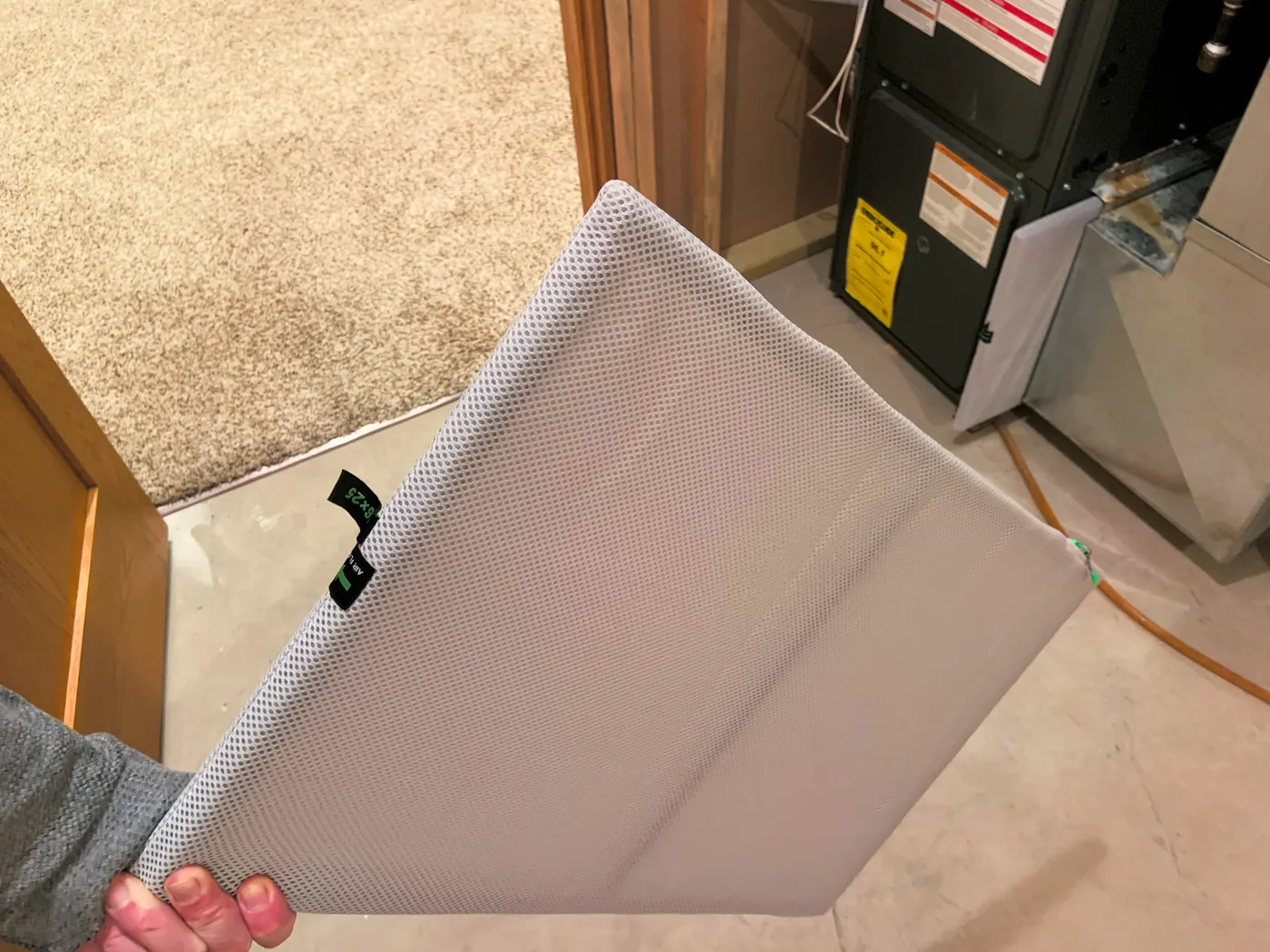
The short answer
Buy a mid-range pleated filter. Change it on time. That is the whole answer.
Filters are rated by a number called MERV. The flat fibreglass ones are around MERV 1 to 4 and catch almost nothing. The very fine ones at MERV 16 belong in hospitals and can starve a home system of air. A pleated filter around MERV 8 to 11 catches the dust and pollen that matter without strangling the airflow.
Side by side
Both sides, plainly, including what each one is bad at.
Mid-range pleated (MERV 8–11)
The folded cardboard-framed filter. The one to buy.
- Catches dust, pollen, pet dander and mould spores
- Lets air through freely, so the system breathes
- Lasts about three months in a normal home
- A few dollars each, sold everywhere
- Costs a little more than the flat fibreglass ones
- Still needs changing, and people forget
The cheap flat one, or the extra-fine one
Either end of the scale. Both cause problems.
- The flat fibreglass ones are the cheapest thing on the shelf
- A very fine filter does trap the smallest particles
- Flat fibreglass catches almost nothing — it protects the fan, not you
- Extra-fine filters block airflow and make the system work harder
- Restricted airflow can freeze an AC coil or overheat a furnace
- A choked system costs more to run and wears out sooner
Which one is you?
Buy the mid-range pleated filter if…
You are a normal household. This is nearly everybody. If somebody has bad allergies, MERV 11 to 13 is a reasonable step up, but check that your system is happy with it first.
Only go finer if…
Your system was built for it — usually a proper filter cabinet rather than a one-inch slot. Cramming a very fine one-inch filter into a slot designed for a basic filter is how people accidentally freeze their AC in July.
Not sure what your system can take?
Ask us. It takes a moment to check what fits your equipment, and it saves an expensive mistake.
Get My Upfront Quote60 seconds online · or call (206) 486-6373
What filters cost
Typical industry ranges for Western Washington — not a quote. Your exact price comes upfront, before any work starts, and you approve it first.
Why homeowners hand it to us
- You approve the price first. Upfront quote before a single screw turns.
- Same-day service. Book in a minute, hear from a tech within 1 business hour.
- 500+ jobs done by 4.9★ rated, professional technicians.
- Fixed right, guaranteed. If it’s not right, we make it right.
Quick answers
How often should I change my filter?
Roughly every three months for a one-inch pleated filter. Monthly if you have several pets or someone in the house has bad allergies. A thick four-inch filter in a proper cabinet goes six to twelve months.
What does MERV actually mean?
It is a scale from 1 to 16 for how small a particle the filter catches. Higher catches more, but higher also means harder for air to get through. Home systems are generally happiest between 8 and 13.
Can a filter really damage my system?
A filter left in far too long, or one too fine for the equipment, restricts the airflow. In summer that can freeze the indoor coil. In winter it can make the furnace overheat and shut itself down on its safety switch. Both are common calls and both are avoidable.
Which way round does it go in?
There is an arrow printed on the frame. It points in the direction the air travels — that is, toward the furnace or air handler and away from the return vent. Fitted backwards it will still work, just not as well.
Do washable filters work?
They save waste but most catch less than a decent pleated filter, and they need to be completely dry before they go back in. A damp filter is a place for mould to grow.
Want cleaner air than a filter alone can give?
We will tell you what your system can take and what a whole-home option would cost, upfront.
Get My Upfront Quote60 seconds online · or call (206) 486-6373
More comparisons: Tune-up vs waiting · DIY vs calling a pro · Smart vs basic thermostat · all comparisons