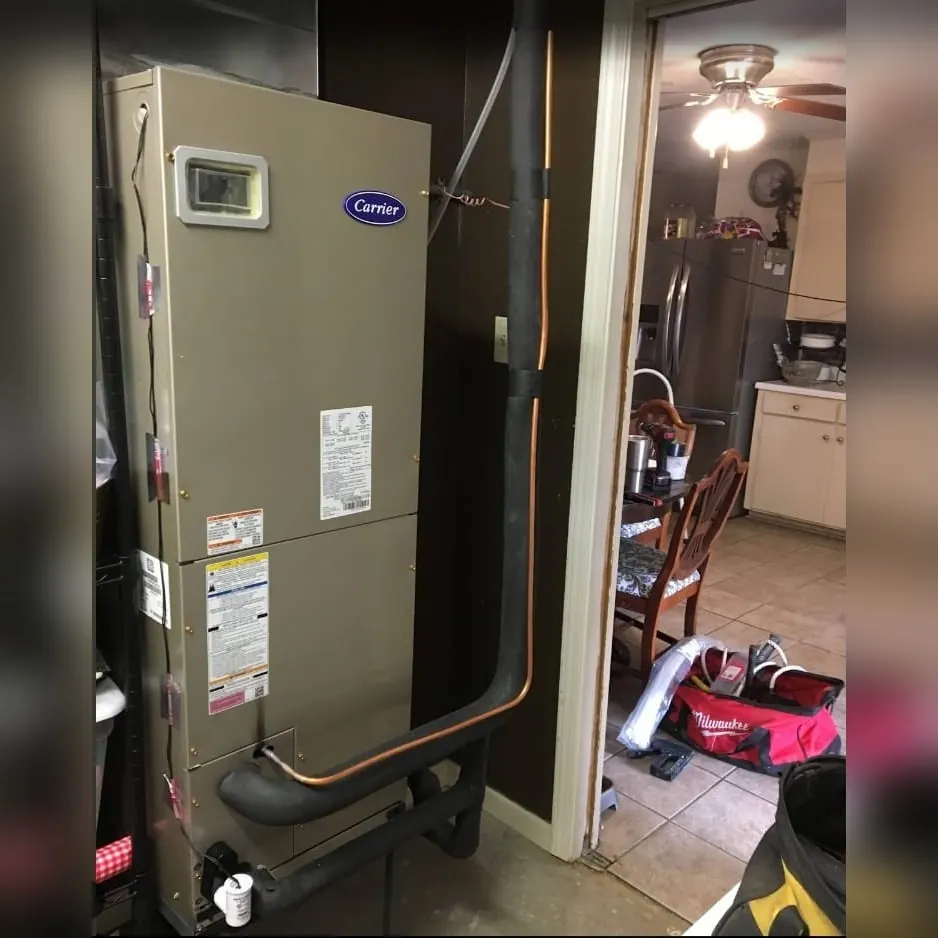
General information about how these parts fail and how a diagnosis is confirmed. Your system may differ, and nothing here replaces someone measuring your equipment. We are an independent contractor and not affiliated with any manufacturer.
What the part actually does
It is a consumable, and it usually fails on the coldest morning of the year, which is not a coincidence.
It glows hot and lights the gas
A ceramic element that heats until it is glowing orange, at which point the gas valve opens and the burner lights off it.
It is a wear part
It is designed to be replaced. They crack eventually, and they crack more often on cold mornings when the furnace is cycling hardest.
It is brittle
They break easily. Technicians generally test them at the plug rather than removing them, precisely to avoid breaking a good one.
The sequence is the diagnosis
Inducer, then glow, then light, then stay lit. Which step fails tells you which part is at fault, and you can watch all four.
What is actually going on
The pattern that means something else is wrong
Igniters are consumables. They are not supposed to be annual.
Two igniters in two seasons
That is not bad luck with parts
Repeat failures point at a root cause: high line voltage, condensate dripping onto it, short cycling, delayed ignition, or debris. If you are on your second in as many winters, the useful conversation is about why, not about the part.
Watch one cycle. It takes three minutes.
This is the most useful thing on the page and it costs nothing.
Do you hear the inducer start?
A small fan that runs before anything else
If nothing happens at all, the sequence is stopping before the igniter is ever asked to do anything, and the igniter is innocent.
Does it glow orange?
Watch through the sight glass
No glow means either the igniter has failed, or the board never energised it. Those are very different problems, and the board will not energise it until the pressure switch closes.
Does the burner light?
Glow but no flame is not an igniter fault
If it glows properly and gas never lights, you are looking at the gas valve, the gas supply or pressure, or the burners. The igniter did its job.
Does it stay lit?
Lights then goes out after a few seconds is a different part again
That is the flame sensing path rather than the igniter. Same furnace, entirely different repair.
What should be checked before an igniter is quoted
Particularly when there is no glow, because that is the ambiguous one.
Whether the board is energising it at all
Tested at the plug
If no voltage is arriving, the igniter is fine and something upstream stopped the sequence.
The pressure switch and everything behind it
This is the most common reason for no glow on a high efficiency furnace
The board will not energise the igniter until that switch closes. A failing inducer, a blocked or wrongly sized flue, a cracked pressure switch hose, a plugged condensate trap, or ice at an outdoor drain termination all keep it open.
The limit and rollout switches
Either will stop the sequence before ignition
A rollout trip in particular is a combustion or venting event and needs proper attention rather than a new igniter.
Which replacement part is going in
A universal of the wrong resistance or mounting causes new problems
Wrong specification means ignition failures that then get blamed on other components. Upgrade kits exist and are legitimate, but they have to match the voltage and the mounting.
Four things worth knowing
- No glow does not mean a dead igniter. It means the igniter is not glowing. If the control never sent it power, it never had the chance. That distinction is the whole diagnosis and it is decided by a measurement at the plug.
- Glowing but not lighting is a gas problem, not an igniter problem. The igniter has visibly done everything asked of it. Replacing it will change nothing.
- Touching a new igniter does not ruin it. This is a persistent trade myth and it has been debunked in the trade press — body oils on the element are not what kills them. They are genuinely fragile, so there is a good mechanical reason to handle them carefully, but the oil story is not it.
- An ageing igniter can present as a flame sensing problem. On designs where the igniter also does the sensing, the oxide layer that builds up with normal age acts as an insulator and weakens the flame signal. So an old igniter can produce symptoms that look like a sensor fault.
An igniter is never a reason to replace a furnace
It is an inexpensive part and a short job, and it is a genuine wear item — replacing one after several years is entirely normal and expected, not a sign your furnace is failing. The real question on this page is not cost, it is whether the igniter was the fault at all, because two of the three things that look like an igniter problem are not one. If the sequence you watched showed it glowing properly, or showed nothing happening at all before the glow stage, then whatever you are being quoted should not be an igniter.
Watched the sequence and want somebody to confirm it?
Book a visit and tell us what you saw. It genuinely changes where a technician starts.
Book a Diagnostic Visit60 seconds online · or call (206) 486-6373
How it works when you book
- 1
Tell us what you were quoted, or do not — both work Some people would rather we came in cold. We diagnose it ourselves either way.
- 2
We measure it and show you the reading The number off the meter and the number printed on the part. If those two do not disagree, the part is not the problem.
- 3
You get the price in writing before anything starts Itemised, and you approve it. If the honest answer is that nothing needs replacing, that is what you get.
Our service areas
We run out of Covington and cover the greater Puget Sound area.
King County
Covington, Kent, Renton, Maple Valley, Auburn, Federal Way, Des Moines, Enumclaw, Bellevue, Issaquah, Sammamish, Bothell
Pierce County
Tacoma, Puyallup, Lakewood, Sumner, Bonney Lake
Snohomish County
Lynnwood, Everett
Not on the list? We cover the greater Puget Sound area around our Covington base. Book it and a technician confirms within 1 business hour.
Why homeowners hand it to us
- You approve the price first. Upfront quote before a single screw turns.
- We answer 24/7. Book in a minute, hear from a technician within 1 business hour.
- 500+ jobs done by 4.9★ rated, professional technicians.
- Fixed right, guaranteed. If it’s not right, we make it right.
Quick answers
There is no glow at all. Does that mean the igniter is dead?
Not necessarily, and this is the most common misunderstanding about this part. It means it is not glowing, which is equally consistent with the control never sending it power. On a high efficiency furnace the most frequent reason for that is the pressure switch not closing, which points at venting, the inducer, a cracked hose or a blocked condensate trap.
It glows but the burner never lights.
Then the igniter is working. You are looking at the gas valve, the gas supply or pressure, or the burners themselves.
It lights and then shuts off after a few seconds.
Different part again. That is the flame sensing path, and it is usually a cleaning job rather than a replacement.
I have replaced two igniters in two winters. Is that normal?
No, and it is worth taking seriously. Repeat failures point at a cause: high line voltage, condensate dripping on it, the furnace short cycling, delayed ignition, or debris in the burner area. Fitting a third without finding that is money spent to buy the same winter again.
Can I fit one myself? They are cheap online.
It means opening the burner compartment of a gas appliance, and the element runs at line voltage and breaks if you look at it wrong. Beyond the safety, the risk is fitting the wrong specification and creating a fault that gets blamed on something else.
Tell us what you saw.
Book online in about a minute. Inducer, glow, light, stay lit — whichever step failed goes in the notes.
Book a Diagnostic Visit60 seconds online · or call (206) 486-6373
More from our site
Furnace repair cost · The flame sensor, explained · All parts explained · Heating services