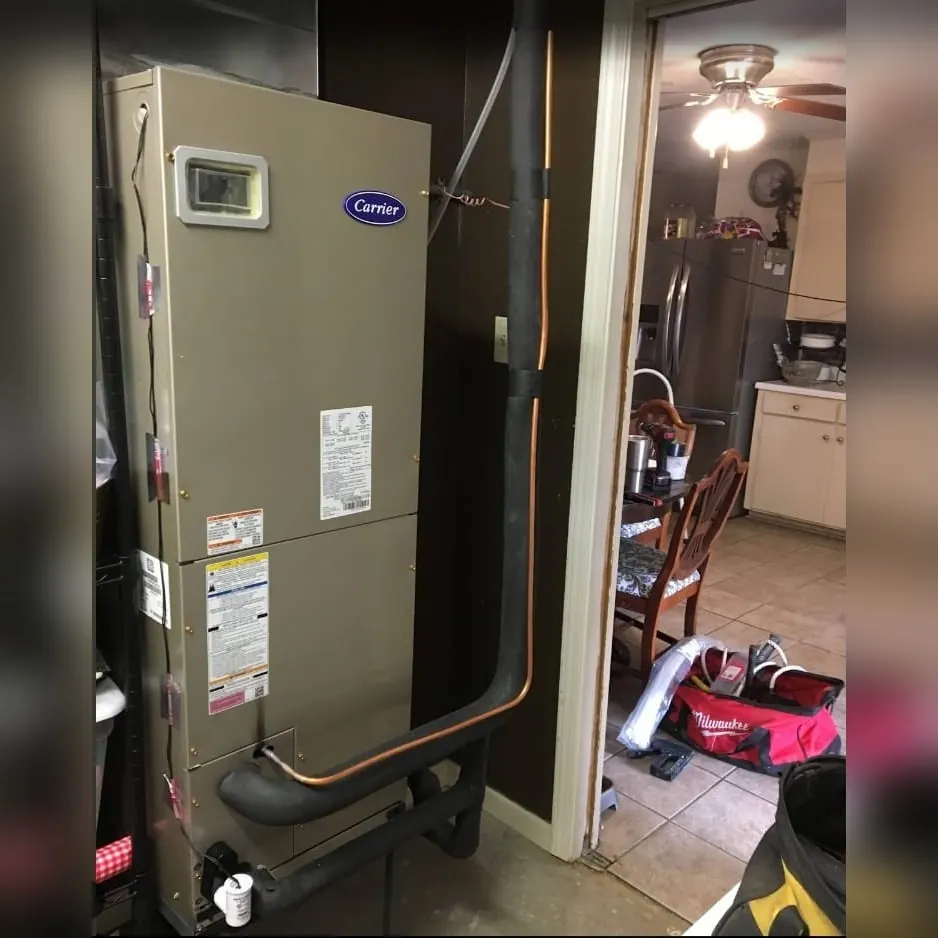
General information about how these parts fail and how a diagnosis is confirmed. Your system may differ, and nothing here replaces someone measuring your equipment. We are an independent contractor and not affiliated with any manufacturer.
What the part actually does
It is a safety device, and understanding that explains both why it matters and why it must never be bypassed.
It proves the flame is really there
A thin metal rod sitting in the burner flame. A tiny current passes through the flame itself, and the furnace uses that to confirm gas is actually burning.
Its failure has a signature
The furnace lights, runs for roughly three to seven seconds, then shuts down. Then it tries again. That timing is characteristic enough to be genuinely diagnostic.
It gets a film on it
Normal combustion leaves a residue that insulates the rod and weakens the signal. That is the usual fault, and it is a cleaning job measured in minutes.
It must never be bypassed
Defeating a flame sensor means gas can flow without a flame. Nobody should ever jumper one out, under any circumstances, for any reason.
What is actually going on
One absolute
Everything else on this page is a matter of cost. This one is not.
Never let anyone bypass it
Not as a temporary measure, not to get you through the weekend
This device exists to stop gas flowing when there is no flame to burn it. Defeating it removes that protection entirely. If somebody offers to jumper it out to keep your heat on, decline and call somebody else.
What you can observe, and it is genuinely useful
Two minutes at the furnace with nothing opened.
Watch through the sight glass and time it
This is real diagnostic information
Turn the heat up and watch. Does the igniter glow? Does the burner light? How long does it stay lit before it goes out? Three to seven seconds and out is the flame sensing signature. Tell whoever comes — it saves them a cycle.
Note the flash code
The board will be reporting this
Count the pattern on the control light and photograph the legend inside the door.
Change the filter
It is not directly related, and it is not irrelevant either
Restricted airflow causes limit trips that look similar from the sofa, and it is free to rule out.
The question that separates a repair from a sale
There is a number involved, and asking for it is entirely reasonable.
Was cleaning tried first?
The honest question, asked plainly
Cleaning the rod fixes this symptom the majority of the time. Replacing it also fixes it, and reads better on an invoice. Asking whether cleaning was attempted is not an accusation and any decent technician will answer straight.
What did the flame current read, before and after?
This is measured in microamps and it is the actual test
A weak signal and a healthy one are different numbers. If the reading was low, cleaning was done, and it came up — that is a proper repair and you can see it worked. If nobody measured anything, nobody knows whether the sensor was the problem.
How was it cleaned?
It matters more than you would expect
Sand cloth or emery cloth leaves a residue that hurts conductance, which means a badly cleaned sensor performs worse. Fine steel wool or a melamine sponge, wiped properly clean, is what the trade guidance recommends.
Was the ground and the polarity checked?
A poor ground produces exactly this symptom with a perfectly good sensor
So does reversed incoming polarity. Both are wiring faults rather than part faults, and both get sensors replaced unnecessarily.
Five things that cause a weak flame signal besides a worn sensor
- A film on the rod. The common one, and it cleans rather than replaces.
- Poor grounding or reversed polarity at the furnace. The flame current has to return through the furnace chassis. A poor ground breaks that path and the sensor gets blamed.
- The rod sitting in the wrong place. It needs to be properly in the flame. A rod knocked out of position during other work produces this fault with nothing actually wrong with the part.
- A cracked insulator shorting to ground. A real fault, but a different one, and worth identifying correctly.
- Something wrong with the flame itself. Dirty burners, incorrect gas pressure, or a partially blocked flue all change how the flame contacts the rod. This is the important one: if a furnace keeps failing to prove flame after a new sensor, the problem is combustion or venting or grounding, and fitting a third sensor will not touch it.
The economics here are not about cost, they are about honesty
This is an inexpensive part and the labour is minutes, so replacing one never justifies a larger conversation and is never a reason to replace a furnace. The legitimate question is only whether it needed replacing at all. A reasonable thing to ask, without any hostility in it, is simply: was cleaning tried, and what did the reading go to afterwards? If the answer is a number that went from low to healthy, you have had a proper repair. If a sensor has been replaced twice in one season, the diagnosis was wrong both times and something else is disturbing the flame.
Furnace lighting then shutting down after a few seconds?
That is this fault. Book a visit and we will clean it first and measure the difference.
Book a Diagnostic Visit60 seconds online · or call (206) 486-6373
How it works when you book
- 1
Tell us what you were quoted, or do not — both work Some people would rather we came in cold. We diagnose it ourselves either way.
- 2
We measure it and show you the reading The number off the meter and the number printed on the part. If those two do not disagree, the part is not the problem.
- 3
You get the price in writing before anything starts Itemised, and you approve it. If the honest answer is that nothing needs replacing, that is what you get.
Our service areas
We run out of Covington and cover the greater Puget Sound area.
King County
Covington, Kent, Renton, Maple Valley, Auburn, Federal Way, Des Moines, Enumclaw, Bellevue, Issaquah, Sammamish, Bothell
Pierce County
Tacoma, Puyallup, Lakewood, Sumner, Bonney Lake
Snohomish County
Lynnwood, Everett
Not on the list? We cover the greater Puget Sound area around our Covington base. Book it and a technician confirms within 1 business hour.
Why homeowners hand it to us
- You approve the price first. Upfront quote before a single screw turns.
- We answer 24/7. Book in a minute, hear from a technician within 1 business hour.
- 500+ jobs done by 4.9★ rated, professional technicians.
- Fixed right, guaranteed. If it’s not right, we make it right.
Quick answers
My furnace lights and then goes out after about five seconds. Is that the flame sensor?
That timing is the classic signature of the furnace failing to prove flame, and the sensor is the usual reason. It is not the only reason — grounding, polarity, gas pressure, dirty burners and a partially blocked flue all produce it too — but it is where anyone would start.
Can I clean it myself?
It means opening the burner compartment on a gas appliance, so no, we would not suggest it. It is also a genuinely quick job for someone who is already set up to do it safely.
They replaced it and it happened again a month later.
Then the sensor was not the fault. Something is disturbing the flame or interrupting the signal path, and that needs finding rather than another part. Ask what the flame current measured and what else was checked.
Is a new sensor better than a cleaned one?
Not meaningfully, if the cleaned one measures healthy. These rods do eventually wear out and genuinely fail open, and then replacement is correct. The distinction is entirely whether anyone measured it.
How often should it need cleaning?
It varies enormously with combustion conditions and how the furnace runs, and there is no published figure worth quoting. It is one of the things that gets looked at during a maintenance visit, which is part of why those visits catch this before it leaves you without heat.
Ask us what it measured.
Book online in about a minute. If cleaning fixes it, that is what you will be charged for.
Book a Diagnostic Visit60 seconds online · or call (206) 486-6373
More from our site
Furnace maintenance cost · Error codes by brand · All parts explained · Heating services